
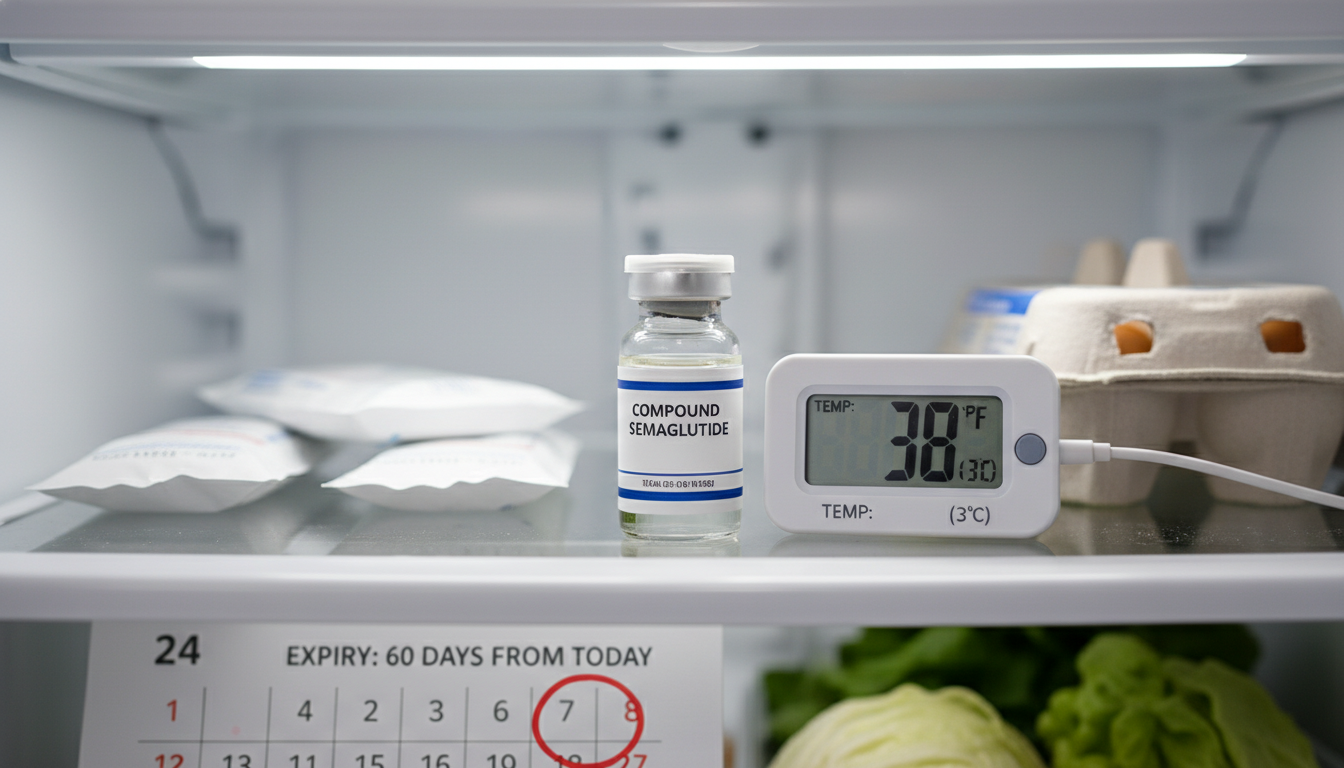
Proper storage temperature can mean the difference between effective medication and wasted investment when it comes to compound semaglutide. Understanding refrigeration requirements isn’t just about following instructions—it’s about protecting your weight loss investment. Here’s what every woman needs to know about keeping compound semaglutide fresh and effective.
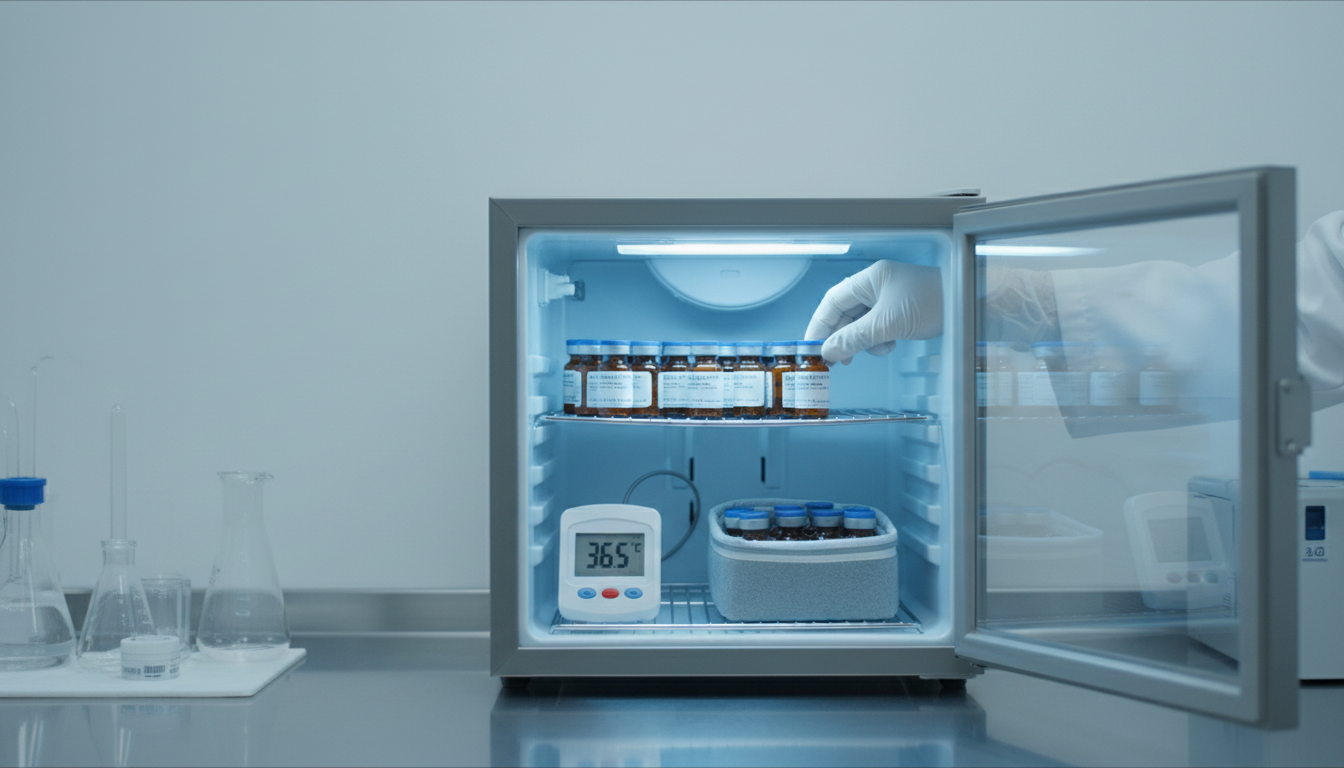
Understanding Compound Semaglutide Storage Requirements
Compound semaglutide requires specific storage conditions to maintain its potency and safety. Unlike some medications that can tolerate room temperature, this weight loss medication needs consistent refrigeration between 36°F and 46°F (2°C to 8°C).
The medication’s molecular structure makes it sensitive to temperature fluctuations. When stored properly in your refrigerator, compound semaglutide typically maintains its effectiveness for 28 to 56 days after first use, depending on the specific formulation and compounding pharmacy guidelines.
Why Temperature Matters
Temperature stability directly affects the medication’s active ingredients. Here’s what happens at different temperatures:
- Below 32°F (0°C): Freezing damages the medication’s structure permanently
- 36°F to 46°F (2°C to 8°C): Optimal storage range for maximum potency
- Above 46°F (8°C): Gradual loss of effectiveness begins
- Room temperature: Significant potency loss within hours to days
How Long Does Compound Semaglutide Last in Different Storage Conditions?
Refrigerated Storage (Recommended)
When stored properly in your refrigerator, compound semaglutide typically lasts:
- Unopened vials: Until the expiration date printed by the compounding pharmacy (usually 30-90 days from preparation)
- First-use vials: 28-56 days after initial puncture, depending on formulation
- Pre-filled syringes: Follow pharmacy-specific guidelines, typically 7-14 days
Room Temperature Exposure
Most compounding pharmacies allow brief room temperature exposure:
- Up to 24 hours: Generally acceptable for single-use situations
- 24-72 hours: Potency may begin to decrease
- Beyond 72 hours: Significant effectiveness loss likely
The reality is that accidental room temperature exposure happens. If you’ve left your medication out briefly, it’s usually still safe to use, but don’t make it a habit.
Best Practices for Refrigerator Storage
Optimal Refrigerator Placement
Not all areas of your refrigerator maintain consistent temperatures. Here’s where to store your compound semaglutide:
- Main refrigerator compartment: Store on a middle shelf where temperature is most stable
- Original packaging: Keep in the box or container to protect from light
- Away from the door: Door storage experiences temperature fluctuations
- Never in the freezer: Freezing permanently damages the medication
Temperature Monitoring Tips
Consider these strategies to ensure proper storage:
- Use a refrigerator thermometer to verify temperature range
- Check that your refrigerator maintains 36°F to 46°F consistently
- Avoid storing near the refrigerator’s cooling vents
- Don’t store in vegetable crispers, which may have different humidity levels
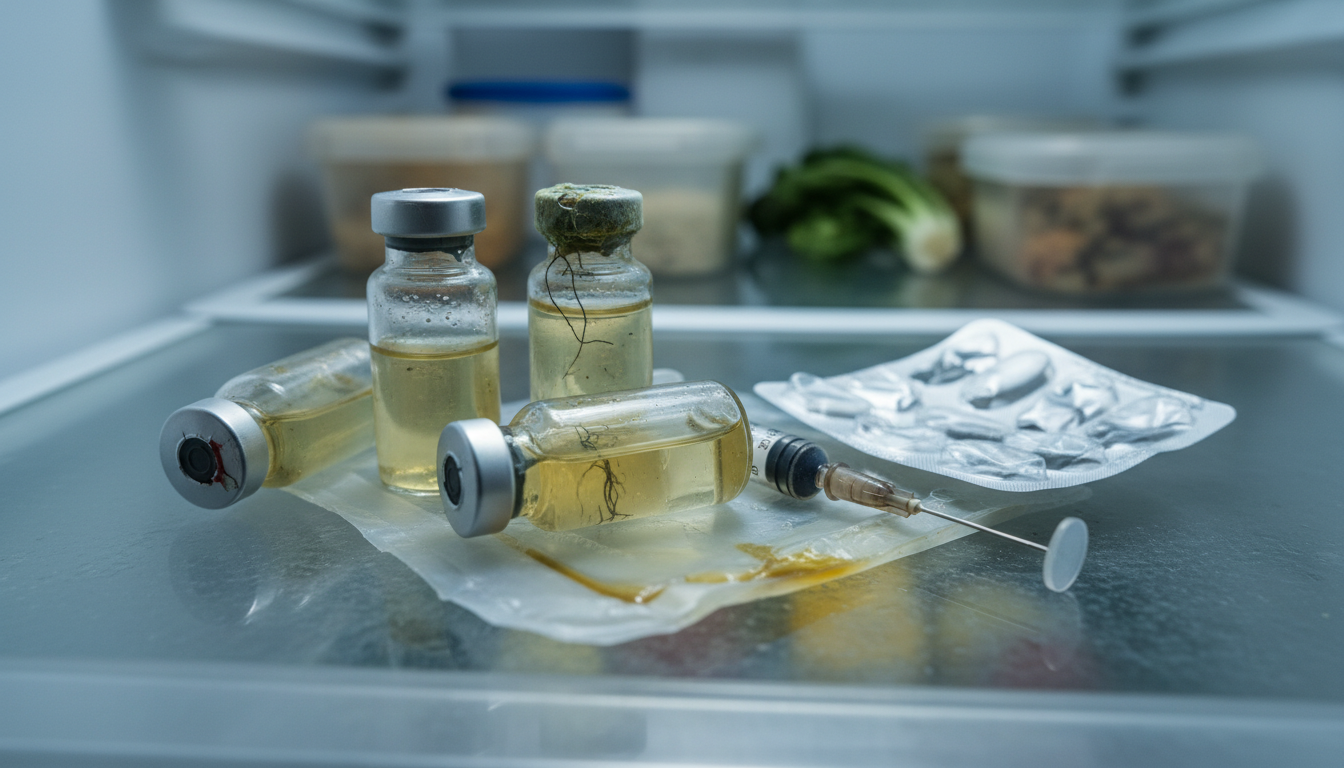
Signs Your Compound Semaglutide May Have Gone Bad
Visual Inspection
Before each use, examine your medication for these warning signs:
- Cloudiness: Solution should be clear (unless formulated otherwise)
- Particles or clumps: Any floating debris indicates contamination
- Color changes: Significant color shifts suggest degradation
- Crystallization: Crystal formation means the medication is no longer viable
When to Discard
Don’t take chances with compromised medication. Discard your compound semaglutide if:
- It’s been at room temperature for more than 72 hours
- The expiration date has passed
- You notice any visual changes mentioned above
- The vial has been punctured and stored for longer than recommended
Maximizing Your Compound Semaglutide’s Shelf Life
Handling Best Practices
Proper handling extends your medication’s effectiveness:
- Allow the medication to reach room temperature for 15-30 minutes before injection
- Don’t shake vigorously—gently roll between hands if mixing is needed
- Use sterile technique when drawing medication
- Return to refrigerator promptly after use
Travel Considerations
When traveling with compound semaglutide:
- Use insulated cooling cases designed for medications
- Pack ice packs or cooling gel packs
- Never leave in a hot car or direct sunlight
- Consider shorter trips may not require special cooling if under 24 hours
Cost-Saving Storage Tips
Preventing Waste
Compound semaglutide represents a significant investment in your health journey. Here’s how to protect that investment:
- Set phone reminders for injection schedules to use medication consistently
- Mark first-use dates clearly on vials
- Don’t prepare multiple doses in advance unless specifically instructed
- Consider smaller quantity orders if you’re inconsistent with usage
Insurance and Replacement
Most insurance plans won’t replace medication lost due to improper storage. This makes proper refrigeration even more important for your budget.
Common Storage Mistakes to Avoid
Temperature-Related Errors
These mistakes can compromise your medication:
- Freezer storage: Never store compound semaglutide in the freezer
- Door storage: Refrigerator doors experience temperature swings
- Ignoring power outages: Extended power loss requires backup cooling plans
- Car storage: Vehicles reach extreme temperatures quickly
Contamination Risks
Protect your medication from contamination:
- Always use sterile needles and syringes
- Don’t touch needle tips or vial stoppers
- Wipe vial tops with alcohol before each use
- Never share vials between people
What to Do If Storage Guidelines Are Compromised
Immediate Steps
If you discover storage problems:
- Note how long the medication was improperly stored
- Check for visual signs of degradation
- Contact your compounding pharmacy for guidance
- Don’t automatically assume the medication is ruined—get professional advice
Prevention Strategies
Set yourself up for success:
- Create medication storage checklists
- Invest in a backup power source for your refrigerator if you live in an area with frequent outages
- Keep your pharmacist’s contact information handy for storage questions
- Consider medication management apps that send storage reminders
Working With Your Healthcare Provider
Communication is Key
Keep your healthcare provider informed about storage challenges. They can:
- Adjust prescription quantities based on your usage patterns
- Provide specific storage guidelines for your formulation
- Offer alternatives if storage is consistently problematic
- Connect you with resources for proper storage equipment
Documentation
Track your medication storage and effectiveness. Note any correlation between storage conditions and how well the medication works for your weight loss goals.
Conclusion
Proper storage of compound semaglutide isn’t just about following rules—it’s about protecting your investment in your health and weight loss journey. With refrigerator storage between 36°F and 46°F, your medication typically maintains effectiveness for 28-56 days after first use, depending on your specific formulation.
Remember that consistency matters more than perfection. Brief temperature excursions won’t ruin your medication, but developing good storage habits ensures you’re getting the full benefit of your treatment.
At Ladies First, we understand that managing weight loss medications can feel overwhelming, especially when you’re navigating storage requirements alongside everything else in your busy life. Our team provides clear guidance on medication management as part of our body-positive approach to wellness. With discreet home delivery and supportive care that understands your unique needs, we’re here to make your weight loss journey as straightforward as possible—including helping you protect your medication investment through proper storage practices.